
Moving back from the cloud to your own servers
When the cloud bill has stopped making sense.
We bring back to your own servers the workloads that are cheaper and more predictable in house.

Some stable workloads, after a few years, cost several times more in the cloud than they would on your own machines. We run the numbers with your figures and tell you frankly whether moving back pays off.
When it does, we design the infrastructure, often reusing equipment you already have, and carry out the move in phases, with no data loss and no interruption to work.
What it includes
- Cloud versus on-premise cost analysis
- Sizing of servers and virtualisation
- Phased migration back
- Guaranteed backups and recovery
Where it fits in the method
It is the other side of cloud migration: the goal is not to be in one place, it is to pay a fair price for what you use.
Phase 02 · Tailored DevSGIT
Where it lives in SGIT
SGIT is the integrated management system every client has in the client area. This is where this service is recorded:

Projects and tasks
Status, deadlines, hours and progress for every project, with its tasks and Gantt chart.

Asset management
An inventory of servers, workstations, network and peripherals, with location, warranties, links between devices and a QR label to open the record on your phone.

Technical documentation and network diagrams
The images show the demo company ACME, with fictitious data.
AI-assisted survey
The inventory starts with a photo.
When we survey your equipment, nobody copies serial numbers by hand. We photograph the manufacturer plate, the box or the invoice, and artificial intelligence reads what is written there.
-
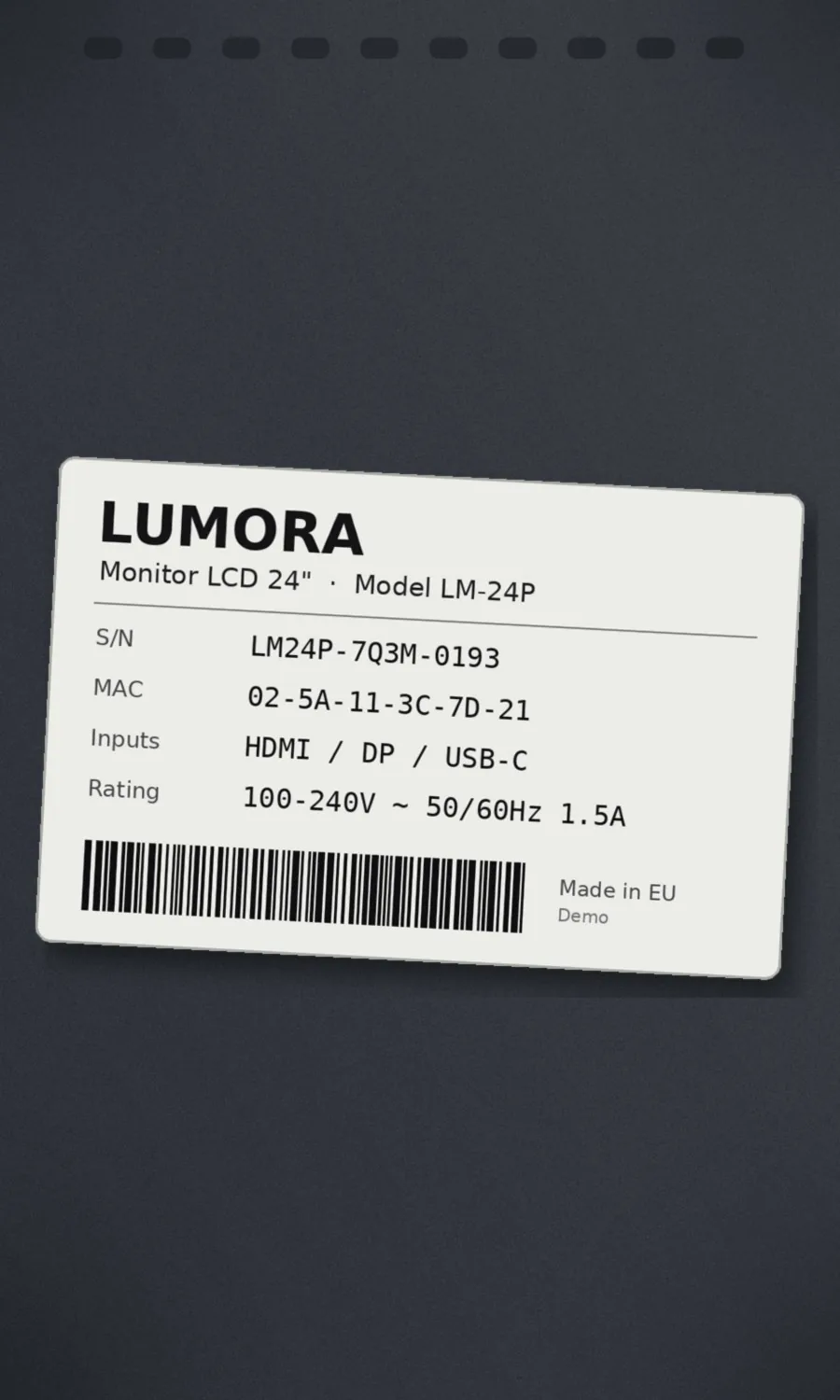
Photograph the plate
With a phone, on site: the plate on the back of the device, the box or the purchase invoice.
-
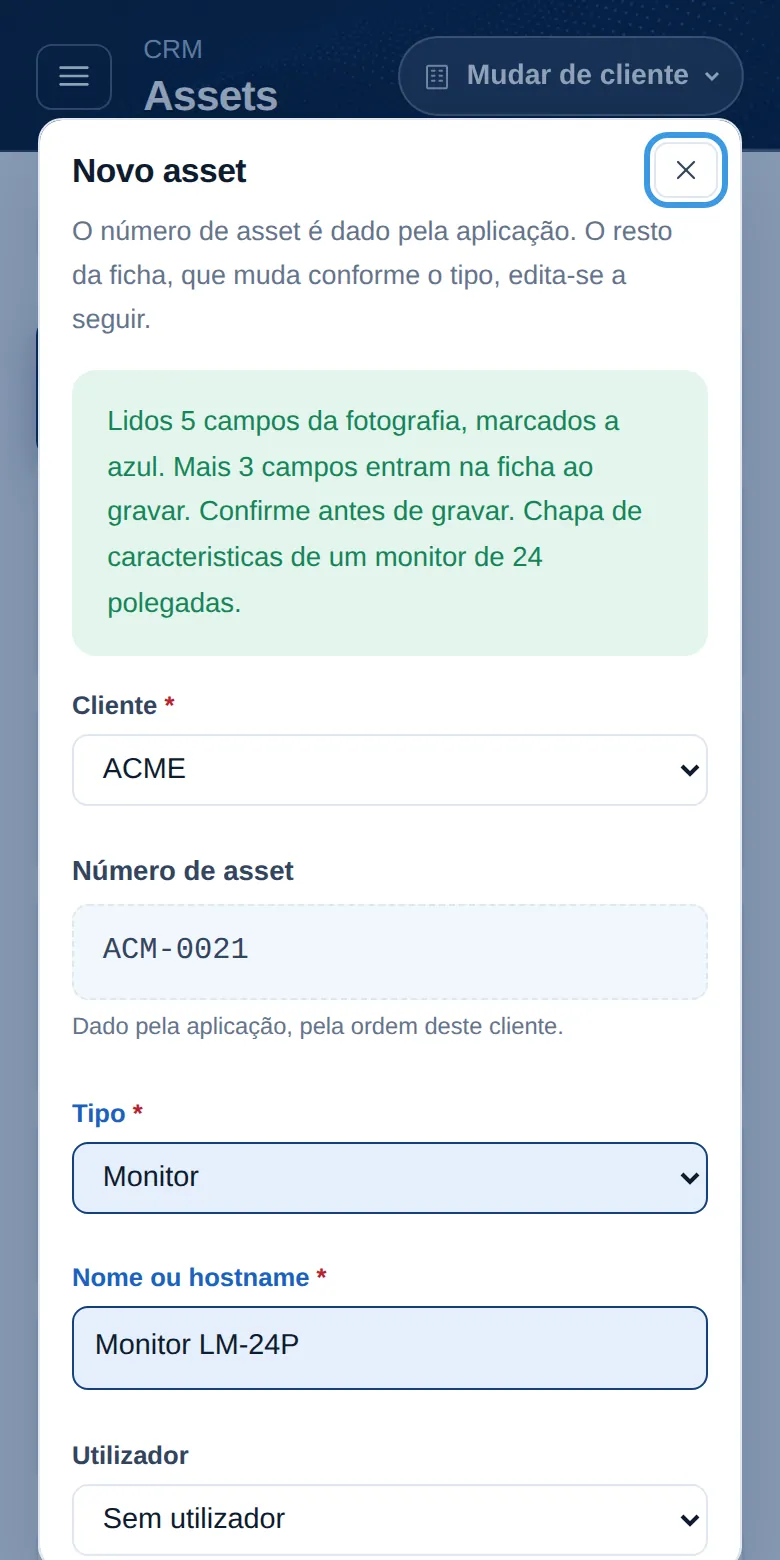
The AI reads and fills in
Device type, make, model, serial number and MAC go into the new record. Anything that cannot be read is left blank rather than made up.
-
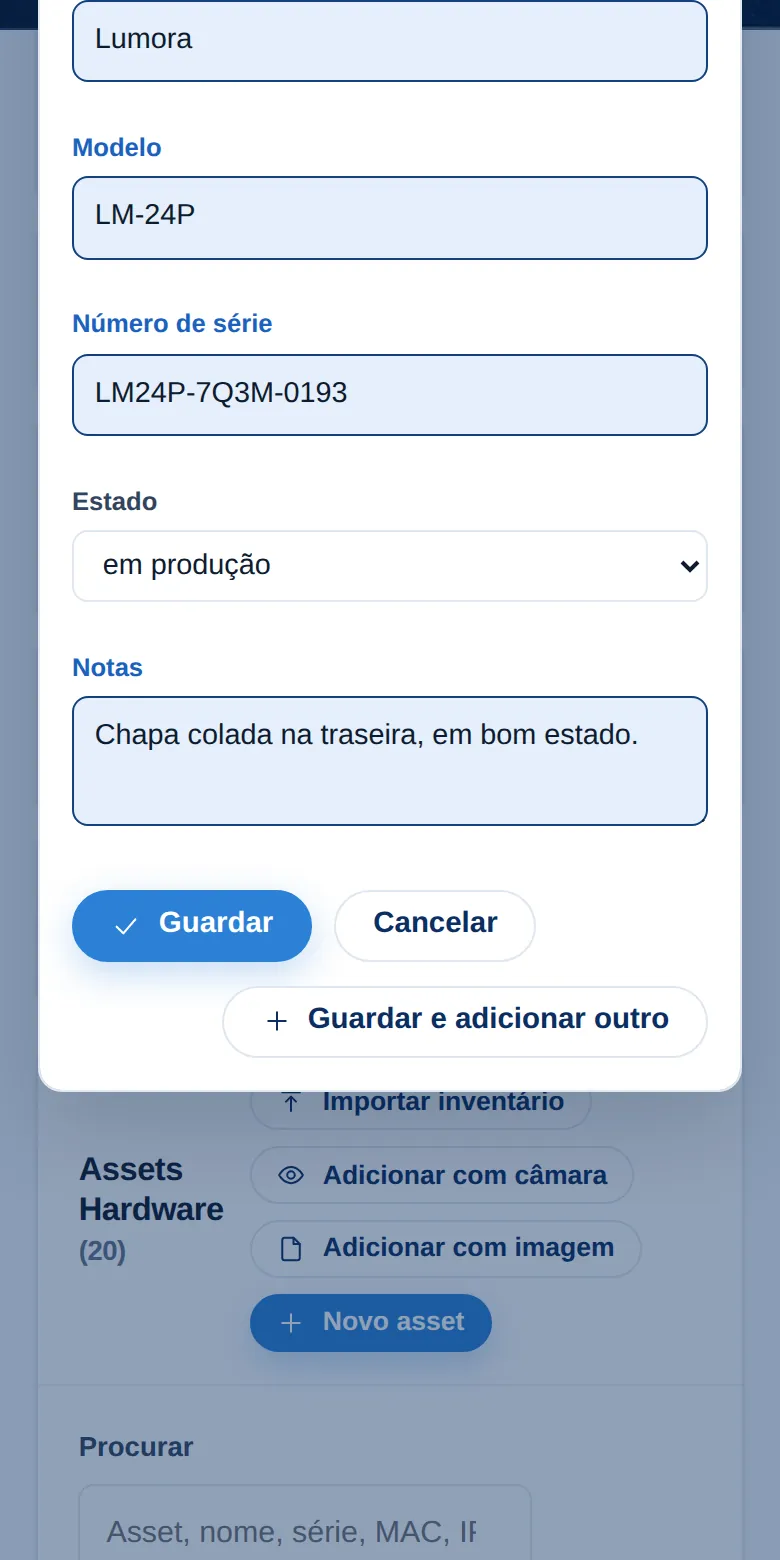
Confirm before saving
The fields that were read are highlighted in blue. Whoever is doing the survey confirms or corrects them, and only then is the record saved, with the photo kept.
-
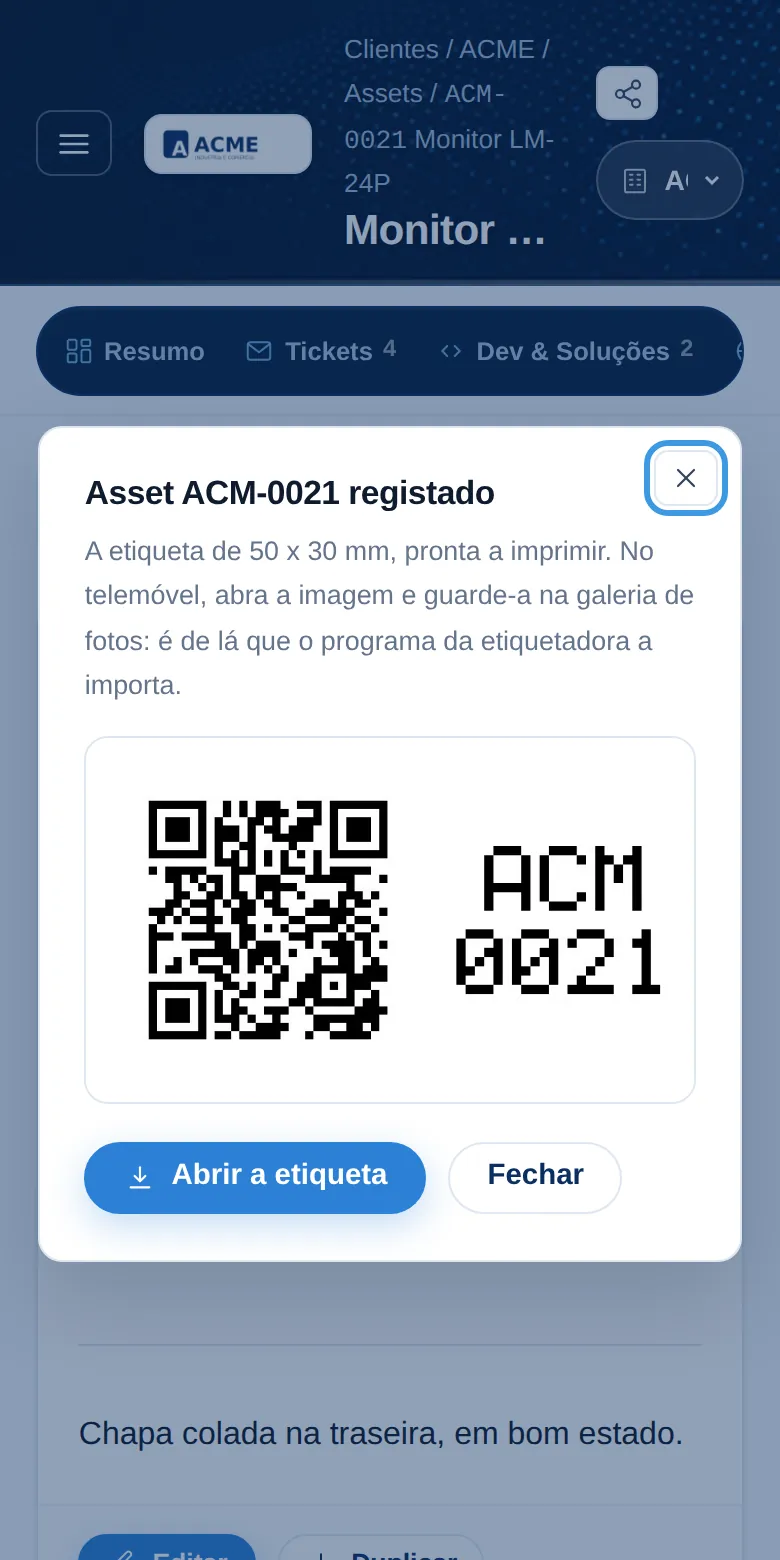
QR label
Each device gets its number and a label with a QR code, ready to print. Pointing a phone at it opens the record, with its history, warranties and connections.
On workstations and servers, a small inventory program completes the record with what the machine knows about itself: processor, memory, disks and network cards.
Screenshots from the demo company ACME, with fictitious data. The plate belongs to a made-up device.
Other services
Cloud migration
We assess what should go, design the architecture and migrate servers, files and applications with a rollback plan.
Learn more Tailored DevMicrosoft 365 implementation and adoption
Email and file migration, Teams and SharePoint, security, and then training and follow-up until the tool is adopted.
Learn more Tailored DevVirtualisation and server consolidation
Server consolidation on VMware, Proxmox or Hyper-V, including migration between platforms when licensing stops paying off.
Learn moreNeed technology made to measure?
A thirty-minute conversation is usually enough to see whether we are the right fit for you.